
Completed Projects
Tenant Renewal Project
Most apartment owners have a need to predict whether an apartment tenant renews their lease. The results of this project provides important predictive information and conclusions that help owners keep desirable tenants and, in turn, stable rental income. This project also documents everything that went wrong on the way to a trustworthy answer, including an overfit model, two separate data-leakage bugs, and a name-matching bug that silently undercounted a specific group of tenants.
The subject property is a mid-sized apartment community in the city of Pittsburgh. All information discussed and illustrated here is fully de-identified.

Salient Conclusions:
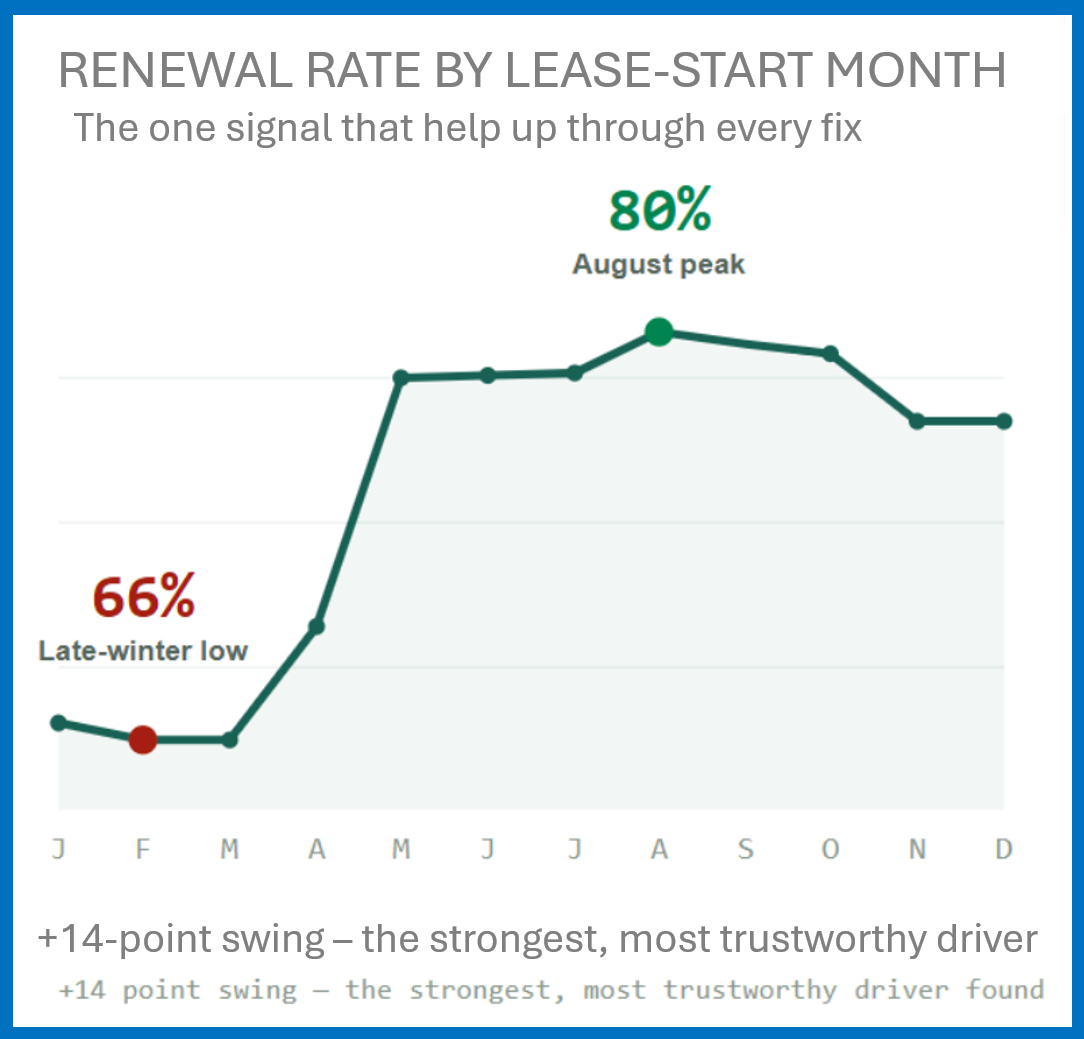
Seasonality is the strongest, most reliable driver, which is connected to weather, school calendars, lease expiration timing
Unit size is the second-strongest, and the most trustworthy. Larger units have higher predicted renewal rates because unit size correlates with household size and tenant income.
Rent, lease term, and unit floor have real but modest effects.
Screening results, satisfaction surveys, and maintenance history have relatively small marginal effects on predicted renewals.
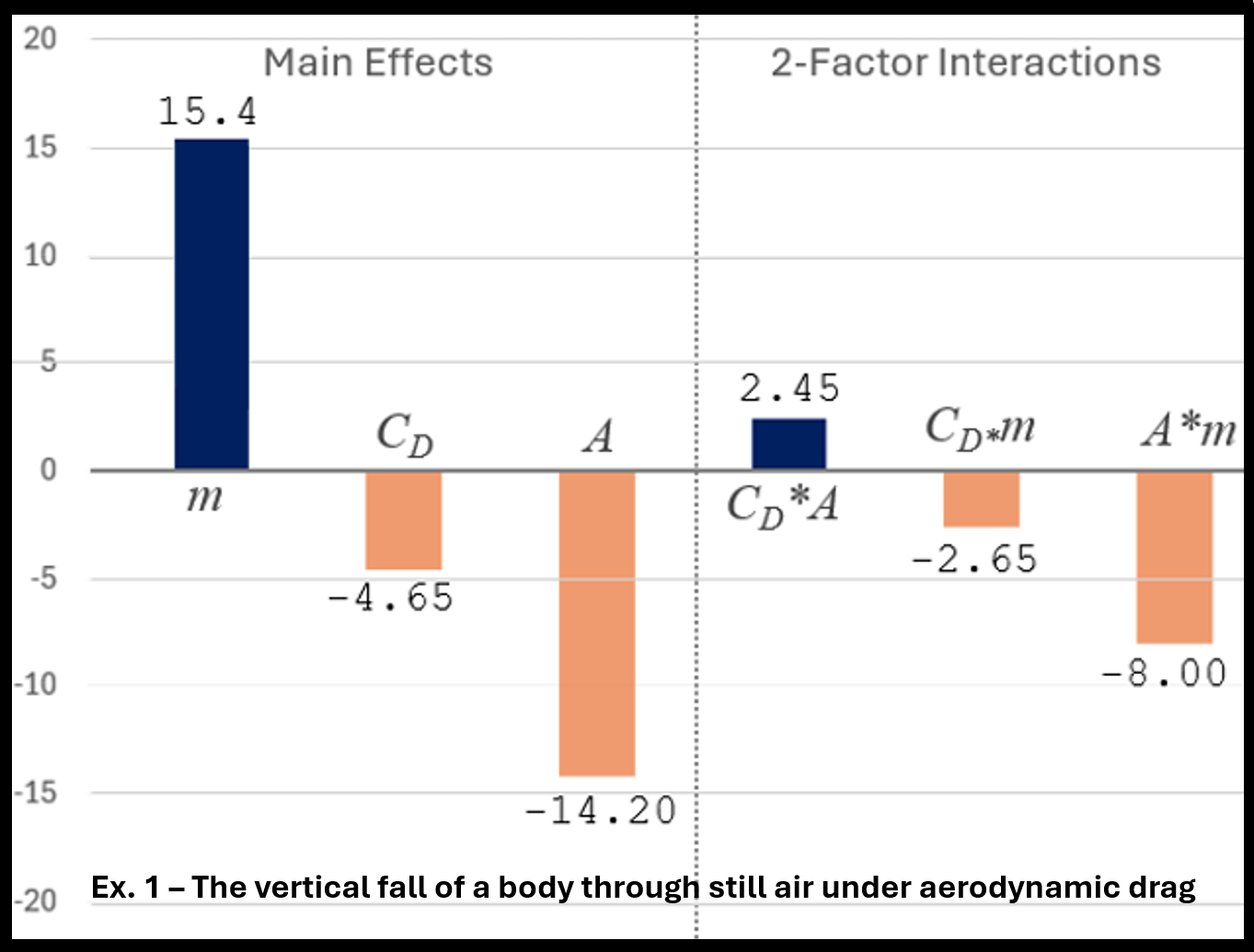
Design of Experiments (DOE) was established as a systematic framework for planning experiments almost 100 years ago. Over the past century DOE served as an important tool for general data engineering through the development of computing and digital data systems. In contemporary AI-driven workflows, the role of DOE is often forgotten or takes a subordinate role.
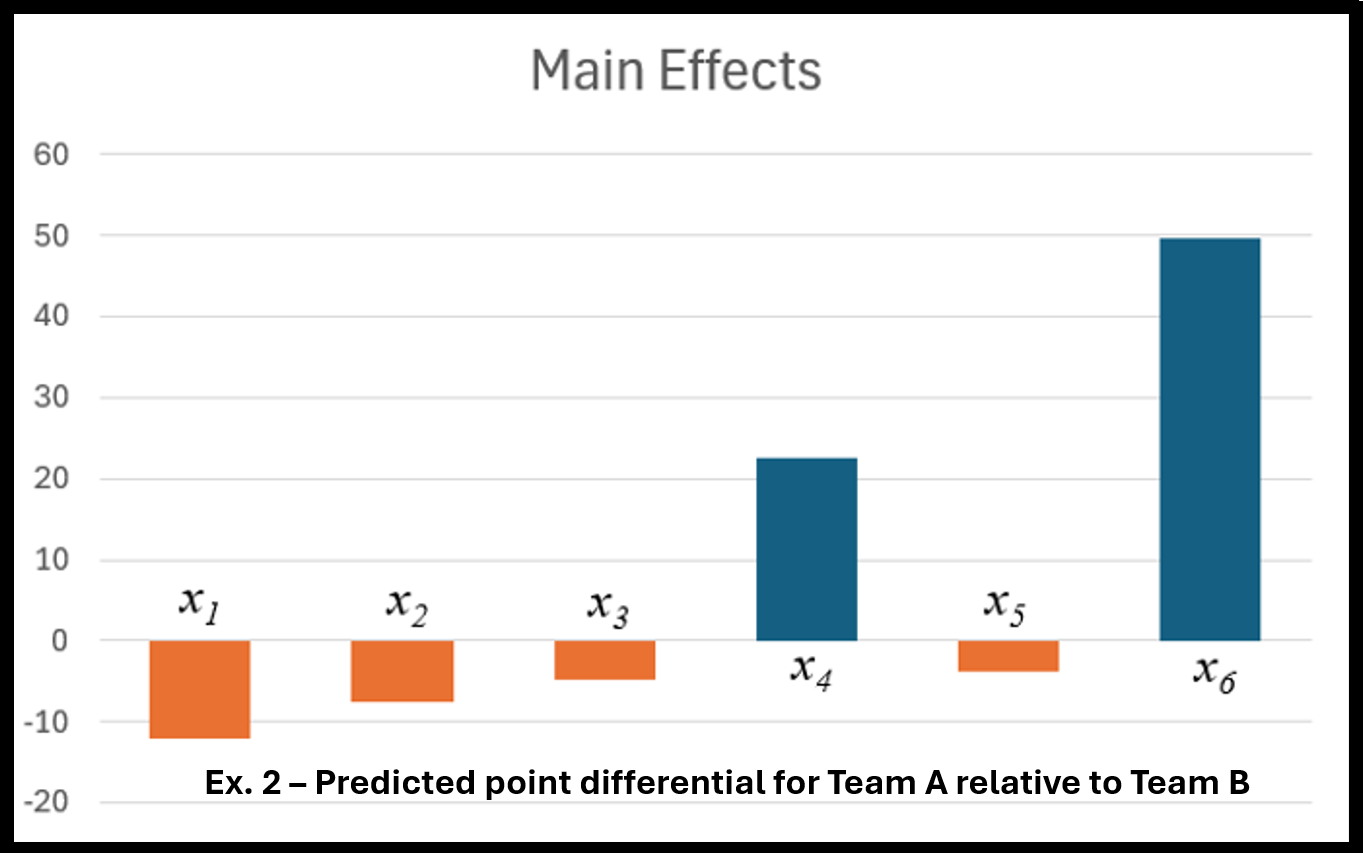
Using two examples, we demonstrated how DOE remains a useful complementary tool for modern modeling workflows with an emphasis on preprocessing. The first example involves a relatively simple problem in nonlinear Newtonian physics in which we describe the development of a DOE-based surrogate model for benchmarking purposes. For the second example we used DOE to analyze observational NFL game data. Specifically, each observation represents one game between two NFL teams with the goal of modeling and predicting the final point differential.
Download project report (PDF) here.
Design of Experiments as a Preprocessing Tool for Model Development
NFL Spread Cover Predictor (Simlified Version)
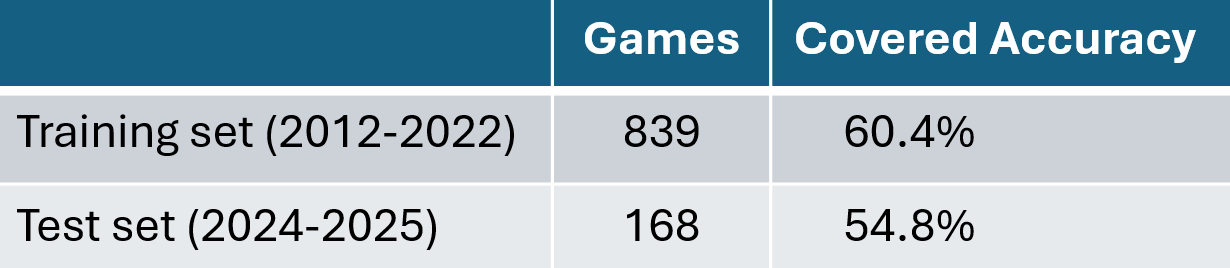
A small, neural network was developed from scratch that predicts whether a team will cover the Vegas point spread. This is a simplified, cleaned-up version of a larger NFL prediction project of mine, built specifically to be easy to read and easy to run. This projects obviously connects to the previous (DOE) project.
For context, a bettor needs to hit around 52.4% of picks against the spread just to break even on standard -110 odds. This model lands a bit above that on data it's never seen, which is a reasonable result for three simple inputs and a tiny network, but nowhere near strong enough to bet on with any confidence.
Disclaimer - This is a personal, educational project. It's here to show how a simple prediction model can be built and tested honestly, not as a tool for actual sports betting. Don't use this to place real bets. Sports outcomes are inherently unpredictable, past performance on a small sample of games doesn't guarantee anything going forward, and gambling should never be treated as a reliable way to make money.
Q: How accurately can Emergency Department (ED) admission be predicted for an individual patient at the time of triage, using routinely collected clinical and demographic information?

Approach: This project develops a machine learning model to estimate the probability that an ED patient will be admitted to the hospital at the time of presentation. Predictor variables include age, sex, body part injured, mechanism and severity of injury, and other routinely recorded triage fields. Two model families are used: logistic regression for interpretability and a random forest classifier for potentially higher predictive accuracy. Both models are trained and evaluated on 25 years of de‑identified ED encounter data.
Select Conclusions and Results:
Over the 25‑year period, approximately 9% of ED visits resulted in hospital admission, 89% were treated and released, and about 2% ended in patients leaving before treatment completion or being transferred to another facility.
Model‑estimated admission probabilities are highest for elderly patients, especially those with high‑severity injuries or certain high‑risk injury categories.
Over the past 15 years there has been a sustained increase in severe injuries among elderly patients across all injury categories, which is consistent with demographic shifts associated with the aging baby‑boomer population.
ED encounters during the Covid‑19 years (2020–2021) show a marked increase in admission rates. Because Covid‑19–related illness substantially altered ED processes, these years should therefore be analyzed separately or treated as outliers when estimating baseline admission patterns.
Q: How well can we predict which University of Pittsburgh football season-ticket holders will renew?
Season ticket retention is the financial backbone of college athletic programs, and it depends on who fans are, where they live, when they buy, and how they engage. Using logistic regression and a random forest classifier trained on Pitt Athletics ticketing and customer records, we modeled each account’s probability of renewing for the following season.
Results: The most important predictors include whether a fan reports age and gender (a proxy for engagement depth), the month of purchase (January–February buyers are the most likely to return), and distance from Acrisure Stadium. It was somewhat surprising to find that fans who report demographic information have an estimated 95% probability of renewing, controlling for other factors. Overall model performance was strong. (Lift curves indicated meaningful separation between likely and unlikely renewals.)
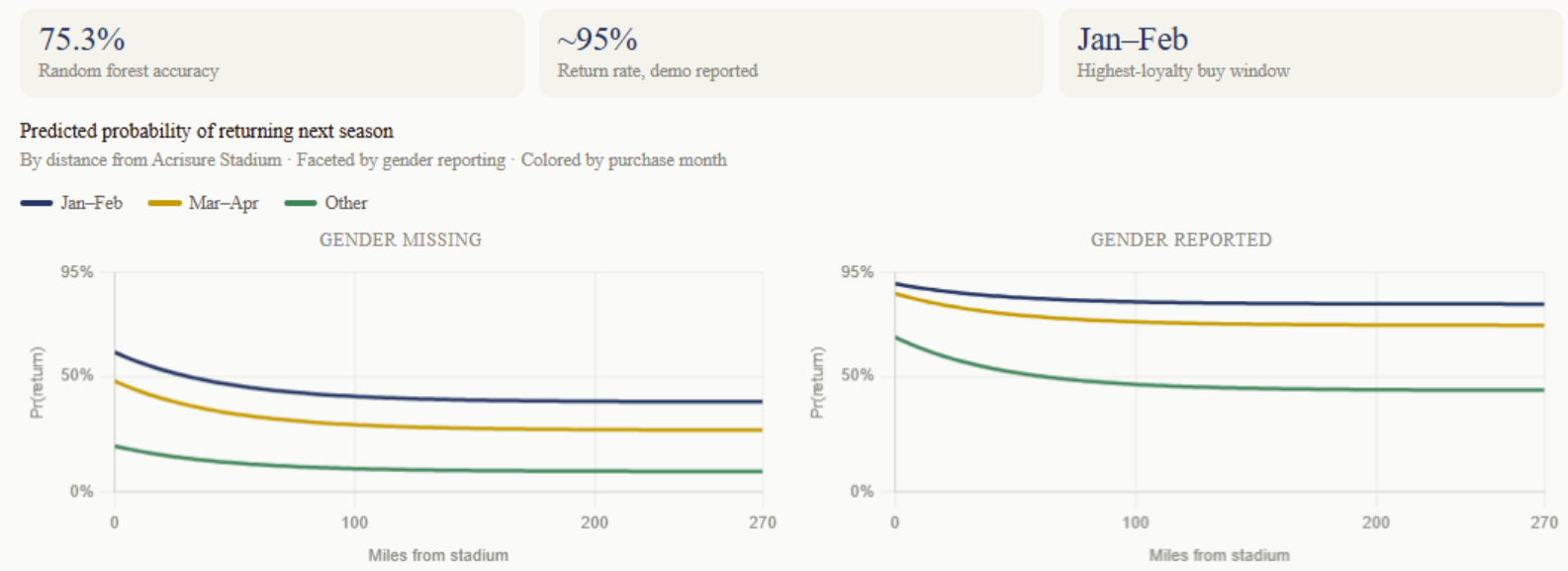
Recommended Action: Integrate the model into the ticketing CRM to flag at-risk accounts (low predicted renewal probability) for targeted outreach before the renewal window closes, and prioritize high-ROI segments for email, phone, or in-game engagement campaigns.
Q: How truly cyclical are cyclical stocks?
Certain groups of stocks (e.g., semiconductor, finance, energy) are commonly labeled cyclical, but what does that mean for projecting their future prices? If a stock exhibits approximately cyclical behavior, we hypothesize that its price can be modeled as a trend plus a sinusoidal component, i.e., a linear term plus a sinusoidal fit. Once fitted, we can estimate its oscillation period and amplitude, which in turn may help identify time windows where buying or selling is more favorable, subject to risk and model uncertainty. This approach differs from more conventional technical indicators that rely on moving averages and volatility bands based on standard deviations of prices. Our method combines linear regression with sinusoidal curve fitting to estimate a fundamental oscillation period, T, for each stock. In some cases, T is long enough that a full or partial cycle aligns with the holding period required for the U.S. long‑term capital gains tax treatment.
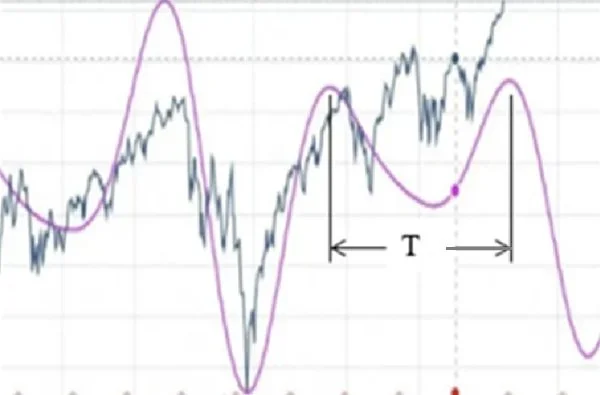
Action: We have modeled industrial and financial stocks and estimated their fundamental periods using daily price data from January 2023 through December 2024 (with the model currently projected forward to December 2026). Given current geopolitical volatility in the Middle East, we plan to delay entries and instead monitor out‑of‑sample performance of the model’s signals before committing capital. Please stand by for updates as we track and evaluate the model’s live performance.
Extensions: Beyond the potential trading applications, our long‑term goal is to use the extracted cycle features (e.g., estimated periods, amplitudes, and phase) as structured inputs to downstream deep learning models.
A caveat: “Markets can remain illogical longer than you can remain solvent.” – John Maynard Keynes.